
A removable, almost invisible clear aligner system planned from a digital scan. The aligners are taken out for eating and brushing.
- 3D simulation before treatment
- Removable, easy to keep clean
- Fewer clinic visits
Brac-e is now DigitArc
Artificial intelligence, clear aligners and a digital workflow. All backed by scientific evidence, all with respect for your time. Send your photos, solve your problem in minutes and follow your treatment from anywhere.
One place
Everything you will need before you come to the clinic, during treatment and after your braces come off; simple, fast and on your phone.
Take 10 photos of your smile and fill in the form. Get your preliminary assessment without coming to the clinic.
Start →Is a wire poking, or has a bracket come off? Find out what you need to do in a few questions.
Choose your problem →Rules for those new to braces, dental care, diet and retainers.
Open the guide →“Treatment hurts”, “it takes years”… The truth behind nine common myths.
See the facts →New studies on artificial intelligence, clear aligners and digital workflow; read, summarised and shared with their sources.
@digitarc.ortho →Treatments offered
Clear aligners or fixed braces: your records and the current literature together decide which is right for you.
A removable, almost invisible clear aligner system planned from a digital scan. The aligners are taken out for eating and brushing.
A digitally planned clear aligner system. Custom-made aligners move the teeth in small steps.
The classic method, using brackets bonded to the teeth and archwires. It is effective and predictable across a wide range of cases.
 Powered by
Plan My Case’s PMC EASY tool is used for the 3D treatment planning of clear aligner cases. Before your teeth move, your plan is designed digitally, step by step, and approved by your orthodontist.
Invisalign, Orthero, PMC EASY and Plan My Case are registered trademarks of their respective owners.
Digital workflow
The process begins with your intraoral and facial photos. From home with a virtual consultation, or at the clinic with digital records, whichever you prefer.
Your records are reviewed digitally. Artificial intelligence and automation are used deliberately, to support your orthodontist’s decision and to save you time.
Braces, clear aligners or both together. Which option suits you is explained alongside the current scientific evidence.
The guide is in your pocket throughout treatment. When a problem comes up, the instant troubleshooter tells you what to do and, if needed, you can reach us with a single tap.
The work is not over once the braces come off. Retainers are your insurance, keeping the smile you worked for in place for years.
Patient Guide
The length and outcome of your treatment depend largely on you. The topics below are with you from the first day to the final check-up.
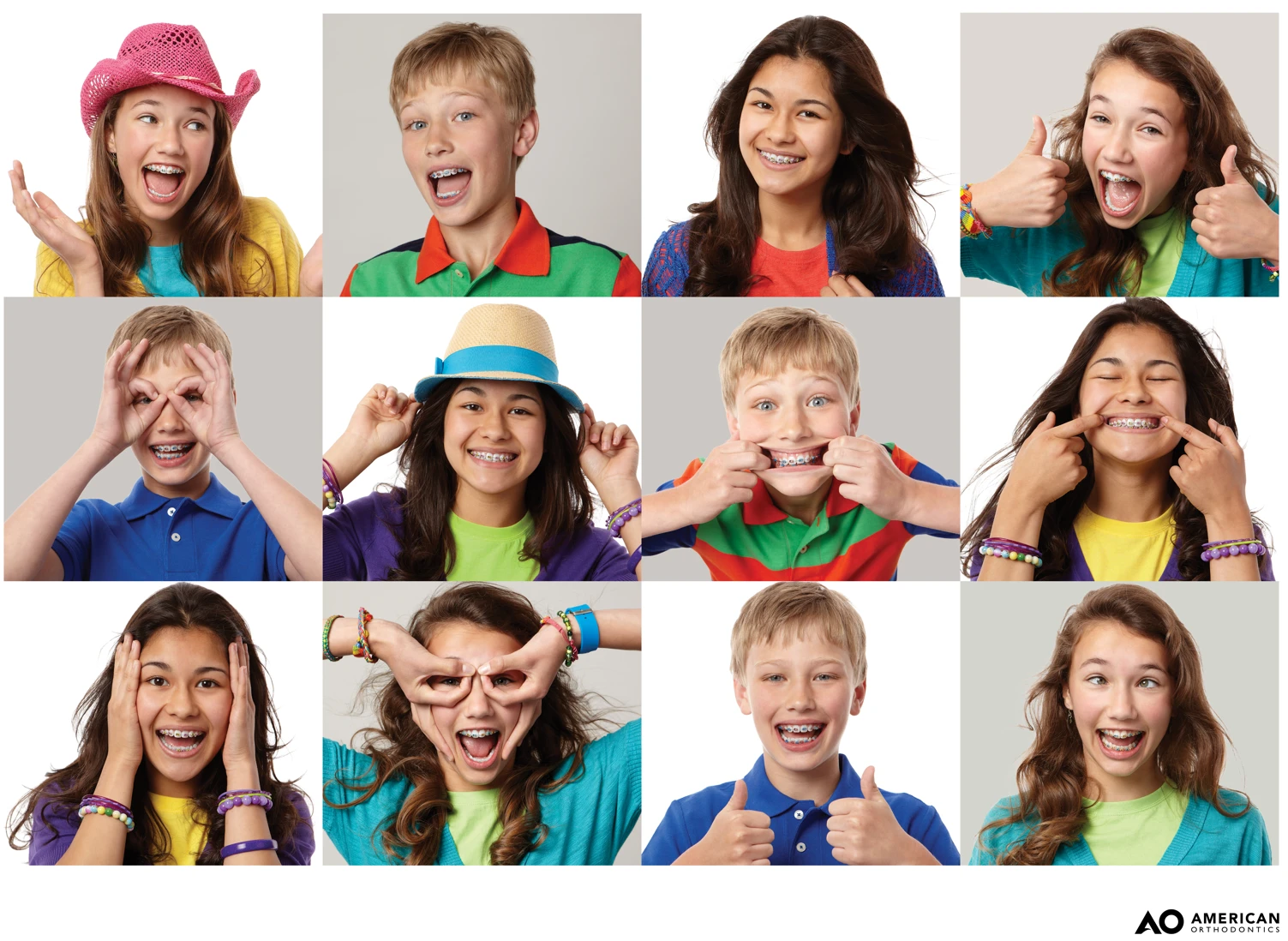
Because of the brackets, deposits build up easily on the teeth and cleaning becomes harder. If food debris is not removed, the acid produced by bacteria leaves white marks on the enamel known as “white spots”. These marks are often noticed only when the braces come off, and they are permanent.
If you could not brush at midday, do not wait until the evening; brush at the first opportunity and make sure you reach three brushings by the end of the day.
Hard foods can dislodge a bracket. Rebonding a bracket means that part of the time spent on that tooth is wasted and treatment takes longer. If this happens, use the instant troubleshooter.
How often you turn the screw on your expander, and by how many turns, is set by the plan prepared for you. Send us your name and your situation, and your orthodontist will send you your personal turning chart.
Request my chartRetainers are an insurance plan for life after braces. They stop your teeth from moving out of alignment and keep your smile straight for years.
Bonded to the back surface of the teeth and almost invisible from the outside. Most often used on the lower front teeth.
After the braces come off, they are usually worn all day for about half the length of your treatment, and only at night after that. Keeping them clean with your toothbrush and a fluoride mouthwash is enough.
About a quarter of orthodontic patients return for retreatment because they neglected their retainer. The moral of the story: wear your retainer.
Instant Troubleshooting
Answer a few questions and find out what you should do right now. Your answers can be sent to your orthodontist with a single tap.
The information here is for general guidance; it does not replace an examination. In case of severe pain, swelling, bleeding or trauma, call directly.
Virtual Consultation
Two steps: first take your photos from the angles below, then fill in the form and send your photos. Go to each box and add the photo you took from that angle.
Tip: Take the photos in daylight with the flash off. For intraoral photos, gently hold your cheeks apart with two spoons or your fingers. If you do not have a panoramic radiograph and a lateral cephalogram, you can leave those two records empty. The photos you add stay on your device; they are shared only when you press “Send photos”.
First fill in the medical history form (it takes a few minutes), then send your photos via WhatsApp.
For patients under 18, we fill in the form together with their parent or guardian; write to us.
Myths / Facts
Tap the cards to see the truth behind the myth.
Frequently Asked Questions
When the braces come off, your teeth feel and look noticeably different, and cleaning becomes much easier. It is normal to experience the following in the first few weeks:
Protect your investment: book a dental cleaning for the week after your braces come off, wear your retainer and come for a check-up twice a year.
Elastics must be worn between the teeth you were shown, in the direction and for the length of time you were shown. Do not take them out except for eating and brushing, and replace them with new ones every day. If you are not sure which tooth to attach them to, do not guess; send a photo and we will look at it together.
Your orthodontist is a dentist, but not every dentist is an orthodontist. Orthodontics requires separate specialist training on top of dental education. Orthodontic treatment corrects not only appearance but also functional problems such as occlusion and biting.
About
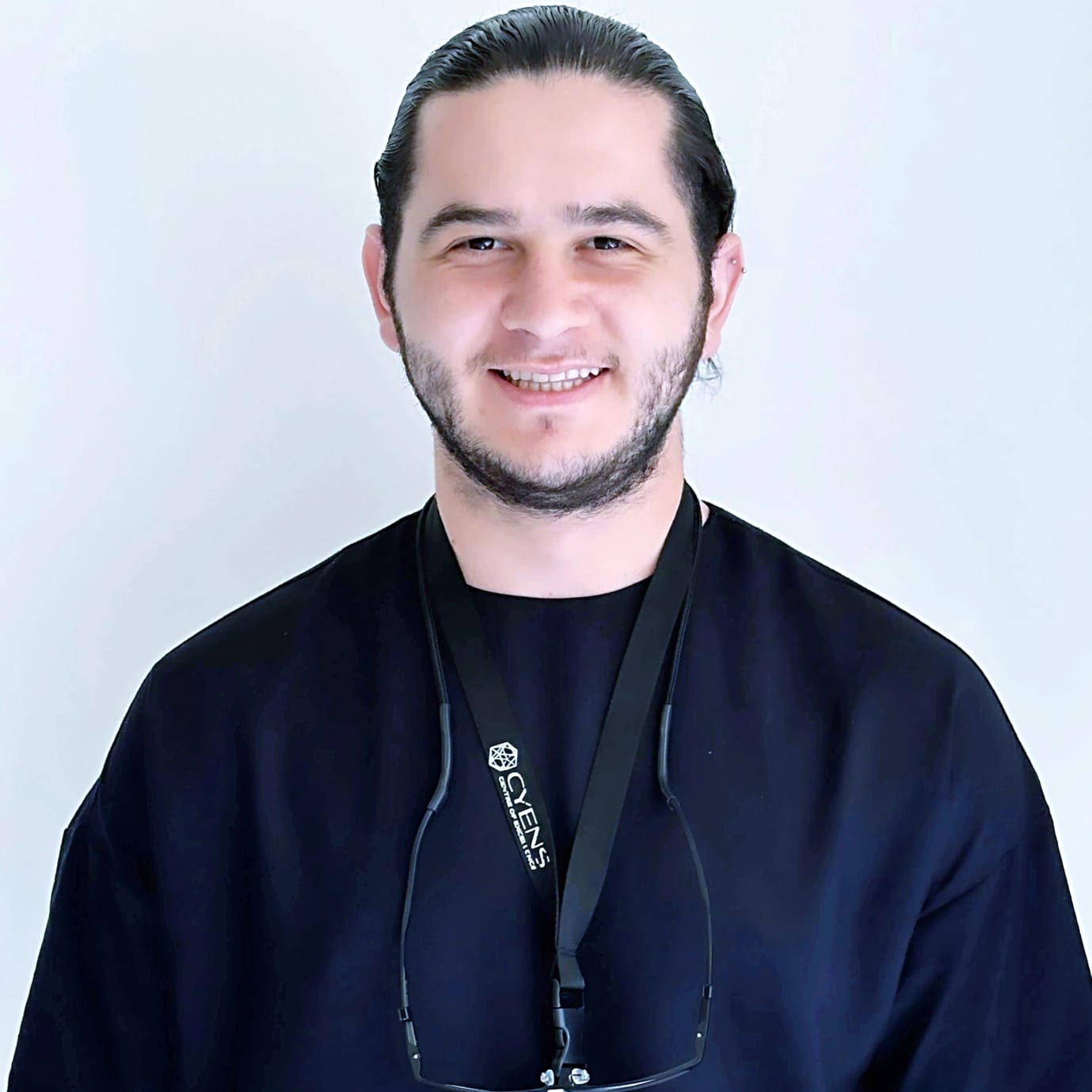
Orthodontics · Founder of DigitArc
“The bad news is time flies. The good news is you’re the pilot.” Michael Altshuler
I was born in Kyrenia in 1998. I completed my dental degree with honours in 2021 and my PhD in orthodontics in 2025; in September 2025 I received the title of Assistant Professor. My areas of expertise are digital orthodontics, artificial intelligence in dentistry and 3D modelling.
In my doctoral thesis, I compared the accuracy of measurements made on 3D models derived from cone-beam computed tomography. My research still focuses on the same question today: how reliable are digital models and artificial intelligence in the clinic?
In an age when even a single minute is valuable, I have made it my philosophy to use advancing technology to make life easier. Artificial intelligence is a powerful tool in humanity’s hands; whether we use it well or badly is up to us. I integrate it into my work deliberately, to give my patients and myself more time and comfort. I invite you to see the result together.
Plus 9 papers presented at national and international congresses.
We share current studies on artificial intelligence, clear aligners and digital workflow with their source and DOI. Send them to a colleague, save them for later.
New research on AI, clear aligners and digital workflow; read and summarised for clinicians.
digitarc@digitarc.ortho Clear aligners · Root resorptionA randomised study using CBCT to measure root shortening after treatment with four premolar extractions.
digitarc@digitarc.ortho Digital workflow · Indirect bondingDo 3D-printed transfer trays position brackets better than the freehand method?
digitarc@digitarc.orthoContact
We are here for your questions, comments or appointment requests. Write your message and it will open in WhatsApp, ready to send.